DepartmentAsia
Yūrei (Ghost)
Namekakejiku (hanging scroll painting)
(not entered)Ghost Woman Hanging Scroll Painting
CultureJapanese
Date1918
Place madeJAPAN, Asia
MediumInk and color on silk
DimensionsUnrolled: 187 x 52 cm
Credit LineMuseum of International Folk Art, Museum Purchase, A.2022.51.1
Object numberA.2022.51.1a-c
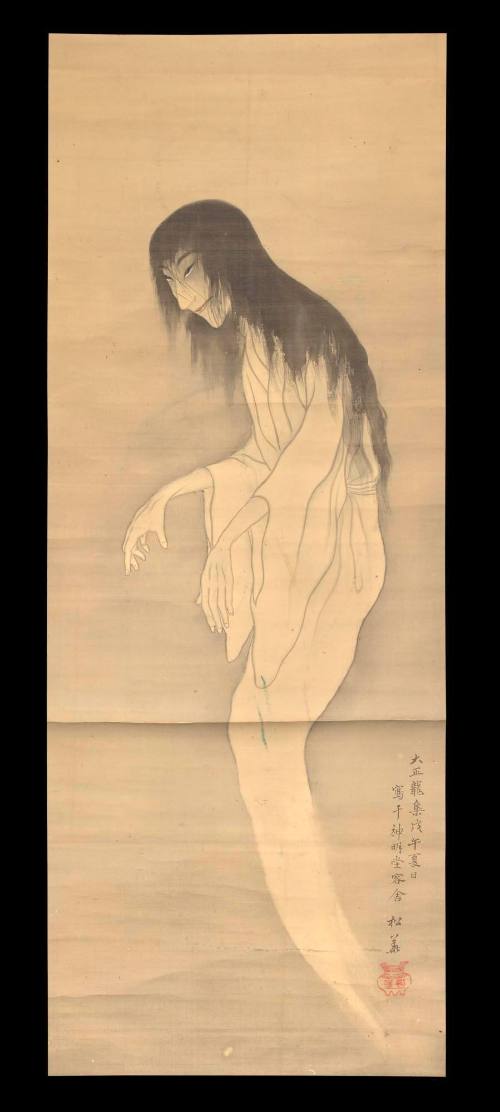
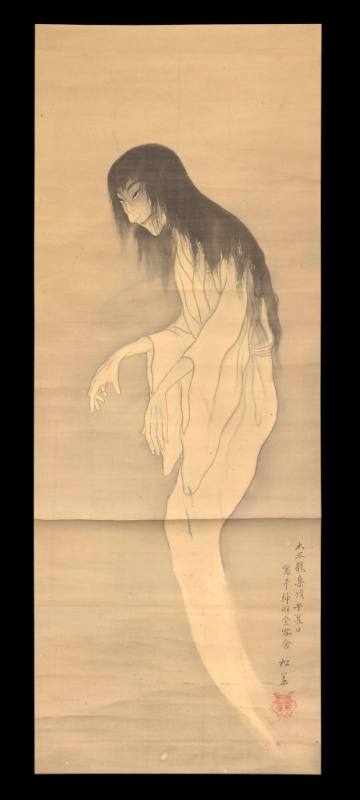
DescriptionJapanese scroll painting of a Yurei, or ghost woman, with typical white clothing and wet-looking disheveled hair, and hovering with no feet depicted. No background/foreground. This painting has a very eerie quality. The woman ghost's white katabira shroud is not worn in the hidari-mae manner. The term hidari-mae refers to a way of wearing a kimono in which the right side is over the left, and only the dead normally wear it that way. This signifies that this ghost might still be present and actively haunting.
This yūrei might be the depiction in performance of a kabuki actor who was famous when Yamada Shōka painted this. The work demonstrates his skills in ink, which are especially apparent in his treatment of long dishevelled hair and the shadow it creates.
The following is written on the scroll: Taishō ryūshuū bogo (tsuchinoe-uma) kajitsu, Senjin meidō kyakusha nite utsusu, Shōka (Painted at the Senjin meido (“one thousand gods brilliant hall”), on a summer’s day in the year of tsuchinotouma of the Taishō period,
by Shōka). The painting’s condition is fair; images show creases and stains. While it is not perfect, the painting is well done; hanging scroll paintings depicting ghosts are hard to find, and usually out of MOIFA's price range. This price is reflective of the quality, balanced with the rarity of ghost paintings

A summer day in 1862


ca. 1680-1700

Collected 1992

20th century